The Real Southern Drakensberg
The Real Southern Drakensberg
The Eastern Cape Highlands occupy the southernmost tip of the Drakensberg mountain range, running along the southern border of the Kingdom of Lesotho. This is the true domain of the wild trout in southern Africa.
The WTA’s waters span the magisterial districts of Barkly East and Dordrecht, with the heritage conservation village of Rhodes serving as the central base for visiting fly fishers.
The Water
The Highlands straddle the great continental divide. Rivers rising on the seaward side of the escarpment flow east to the Indian Ocean via the Umzimvubu, entering the sea at Port St Johns. Rivers rising on the inland side flow westward into the Kraai, then the Orange, and ultimately reach the Atlantic at Oranjemund — more than 1,000km to the west.
Above the escarpment, narrow headwater streams meander across remote plateaus accessible only by 4×4. These streams tumble down waterfalls and rapids, then gradually descend into more accessible valleys lined with indigenous trees and exotic willows, before widening into sandstone gorges and flat floodplains below.
The variety of water is extraordinary. Lilliputian streams above 2,500m carry small, wild trout in tight channels. Valley rivers offer long, pool-studded runs. The Kraai itself, below the confluence of the Bell and Sterkspruit, becomes a serious river with deep ironstone pools capable of holding large fish.
Trout in the Highlands
The Eastern Cape Highlands were first stocked with rainbow trout from the Jonkershoek and Pirie hatcheries in the mid-1920s. Those fish bred prolifically in the wild and their descendants still do. Within a decade, Sydney Hey was fishing these waters and wrote about his experiences in his classic book Rapture of the River.
Rainbow trout are distributed throughout the Middle and Upper Kraai catchments. Brown trout are present in the Vlooikraalspruit at Balloch. Yellowfish migrate up the catchment in September to spawn. Smallmouth Yellowfish travel well into the Bell and Sterkspruit rivers whilst Largemouth generally remain in the Kraai.
Climate & Conditions
The montane environment produces rapid weather changes. All four seasons can occur within a single day. Snowfalls have been recorded in every month of the year in the higher-lying areas. Summer thunderstorms can be severe, with flash flooding a real hazard on gorge beats.
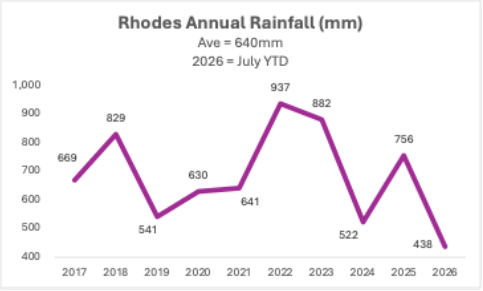
Annual rainfall drives both fish condition and the quality of hatches. The WTA tracks rainfall and day permit sales together the data shows a clear relationship between good rainfall years and higher angler satisfaction.